Quinte Energy Storage Centre
Text

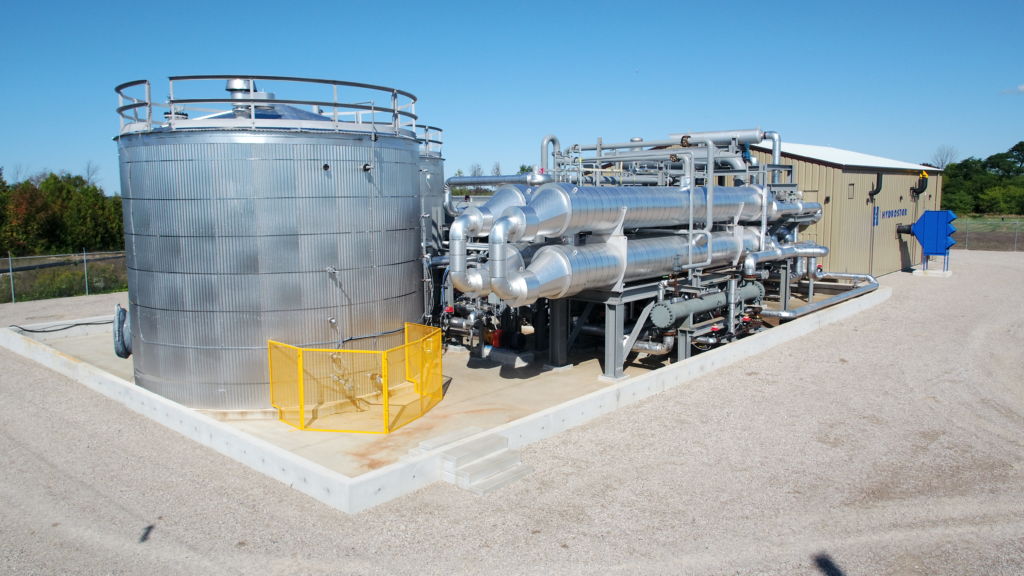
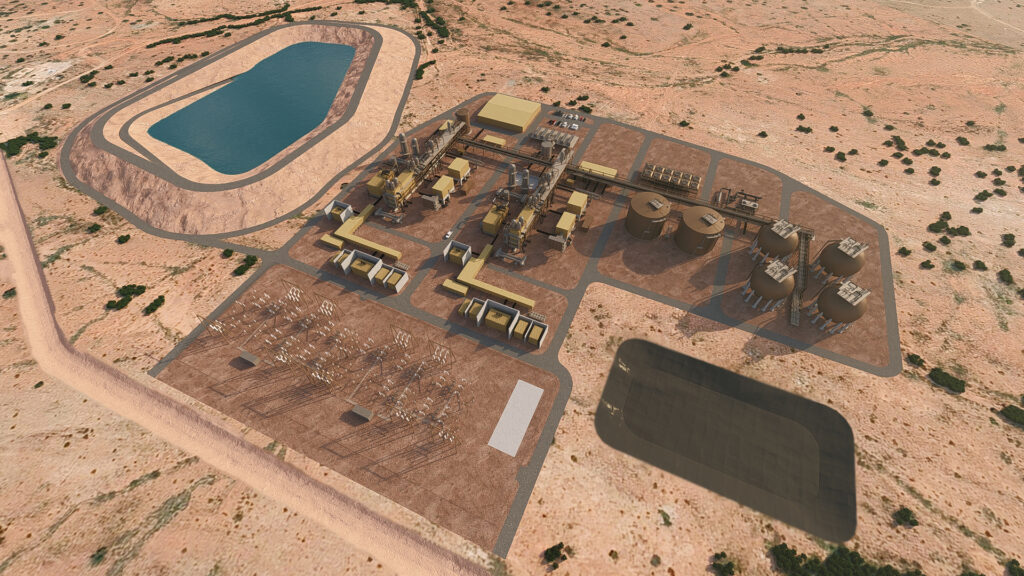
The Quinte Energy Storage Centre is a 500 megawatt (MW) Advanced Compressed Air Energy Storage (A-CAES) facility that is under development in Ontario. It will be capable of delivering 8 hours of energy storage duration, and can be scaled up in both capacity (MW) and storage volume (MWh) at a low marginal cost once operational.
Project highlights

Benefits
Driving economic growth
With a 50+ year lifetime, the facility will provide a stable revenue source for local communities. A-CAES plants use standard components and enable workers from the fossil-fuel industry to transfer existing skills to the clean energy future.
The Project will create high-value opportunities and economic growth in the emerging cleantech sector, including many new construction jobs during the multi-year construction window and new operations jobs for the duration of the Project’s 50+ year life. Among the benefits of A-CAES technology is that its capital and labour-intensive construction process means a higher proportion of spending takes place within the region where projects are commissioned, as compared to competing resources such as lithium-ion batteries.
Servicing Ontario’s Capacity Needs
A significant amount of new capacity will be needed by the early 2030s in Ontario to maintain system reliability in the face of growing electricity demand, the potential for economy-wide electrification, and supply-side dynamics such as expiring contracts for existing resources, as well as age- and technology-based retirements. The Project can directly address growing capacity needs, and provide Ontario’s electricity system with a much-needed source of reliable non-emitting capacity over the 50+ year lifetime, with this capacity being scalable upwards to meet system needs as they emerge in the future.
- One
- Two
- Three
Bullet List:
- One
- Two
- Three
Advancing Decarbonization
The Project is well-suited to advance system-wide decarbonization by serving as an important dispatchable complement to Ontario’s diverse supply mix of non-emitting generating resources for decades to come. The Project’s large and long-duration storage capacity will provide balancing of supply from non-emitting baseload and intermittent generation (such as nuclear, hydro, and renewables) with demand during peak hours. This will be critical to maintaining system reliability as Ontario reduces its reliance on natural gas. Furthermore, the Project will enable the integration of new nuclear, hydroelectric, wind, and solar resources by allowing excess generation to be stored for use during times of system need.
Locational Value
The Project can optimize the use of surplus baseload generation from Ontario’s clean energy resources including its nuclear facilities in the Durham region. Additionally, the strategic location of the project allows for power transfer towards load centres in the Greater Toronto Area and Ottawa. The project can also support the reduction in use of the Lennox Generating Station, thereby reducing emissions locally.
Ratepayers
As a competitive and long-lived asset, the Project can also be a cost-effective solution to Ontario’s emerging needs, while maximizing reliability, affordability, and sustainability for ratepayers in the long run.
Supports Net-Zero Targets
The Project can charge from clean energy resources such as nuclear, hydro, and wind when supply from these resources could otherwise be lost, and discharge this energy during periods of high demand for a long duration (8+ hours), when the IESO would otherwise need to rely on fossil fuel-fired resources to maintain reliability.
Technology Differentiation
A-CAES can be constructed in places where other forms of large-scale synchronous storage cannot (pumped hydro and traditional CAES) and provides grid benefits that other forms of non-synchronous storage cannot (batteries).
Furthermore, A-CAES can support direct emissions reductions that are in line with those of 8-hour lithium-ion batteries and pumped hydro projects when operating, but with a lower lifecycle environmental impact than pumped hydro, with a compact footprint, less water requirements, and greater siting flexibility; and lower lifecycle environmental impacts compared to lithium-ion batteries, when taking into account supply-chain impacts and raw material extraction.
Provide non-emitting dispatchable capacity

Stimulate economic growth and new jobs

Advance emission reduction targets

Ratepayer affordability

A cost-effective solution for Ontario’s emerging electricity needs, while maximizing reliability, affordability, and sustainability
As Ontario moves towards its objective of achieving a net-zero electricity grid, and supporting large economic development growth, it will require large-scale, long duration storage to fully integrate increasing levels of clean generation capacity. A-CAES is the solution.

Gallery

Lorem Ipsum

Lorem Ipsum

Lorem Ipsum

Lorem Ipsum